Point-in-Time Penetration Testing
Raxis Strike
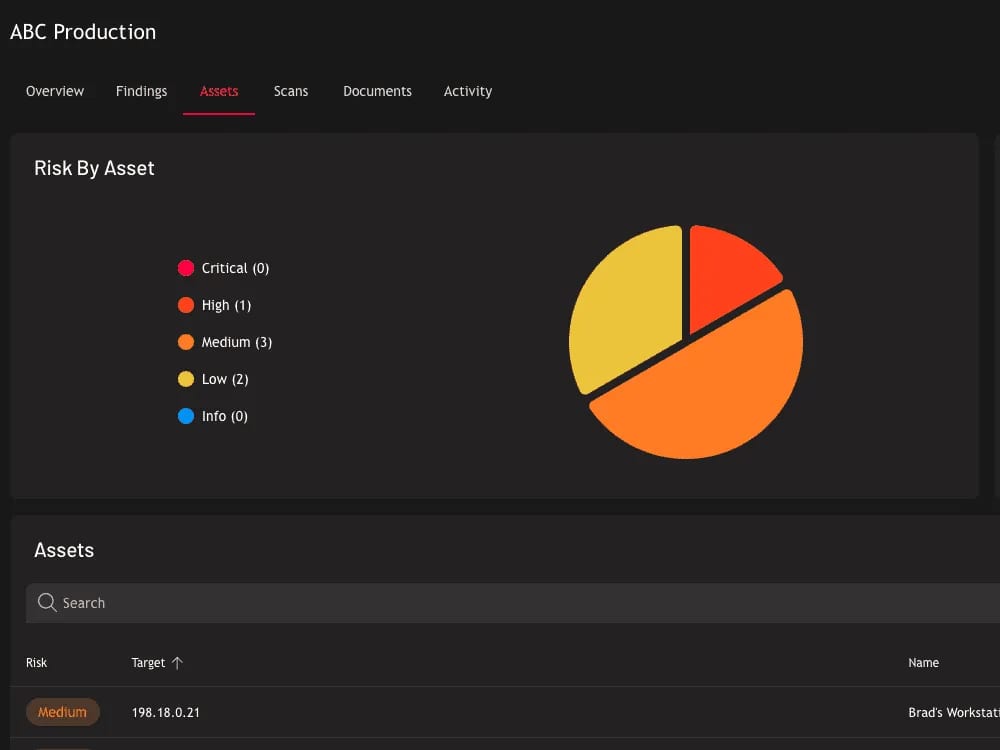
A scheduled external test, defined scope, full report.
Best when you have an annual PCI or SOC 2 deadline to meet.
Scanned by everyone. Tested by someone.
Scanners hit your edge every day and call it clean. A senior U.S. engineer reads the same hosts by hand and finds the one way in. When we reach what matters, we leave a card.
The Internet
Scanned every day
VPN Portal
Clean
Mail Login
Info
Web App
Low
Cloud Storage
Clean
Admin Panel
Low
Forgotten Host
Rated Low
Exploited
Unpatched. Reverse shell.
Internal Network
Domain Admin
Nothing replaces skill. Illustrative scope. A scanner passed all six. One was the way in.
We map your attack surface and hunt exposed credentials, leaked data, and anything that lowers the bar for an attacker.
Every exposed host, port, and service, identified and fingerprinted.
We exploit by hand and chain weaknesses into real impact, not a list of theoretical risk.
Spraying and credential attacks against VPN, email, and login portals test your MFA, lockout, and password policy.
Public login pages and forms probed for injection, authentication bypass, and information disclosure.
Internet-facing assets in AWS, Azure, and Google Cloud tested alongside your traditional infrastructure.
No credentials required, and file uploads allowed.
Default credentials that reveal device settings and customer data.
Valid usernames confirmed, and unlimited guesses allowed.
VPN and email where one guessed password becomes full access.
Outdated software with a public exploit already written.
Breach-dump passwords that still work on live systems.
Raxis Strike
A scheduled external test, defined scope, full report.
Best when you have an annual PCI or SOC 2 deadline to meet.
Raxis Attack
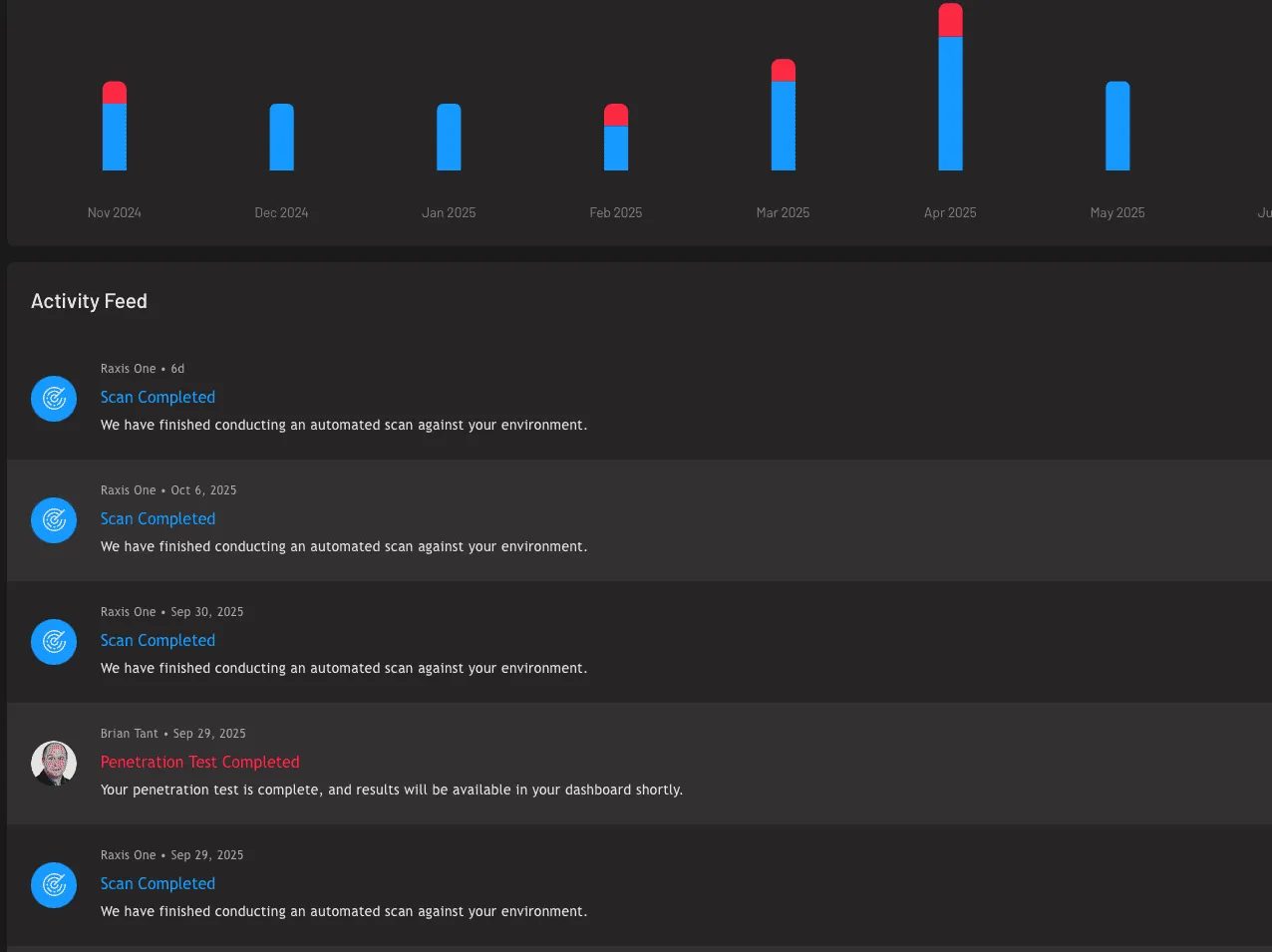
Continuous testing, findings live the moment we confirm them.
Best when your perimeter changes faster than once a year.
A concise readout for leadership and auditors.
Each with a severity rating, reproduction steps, and clear remediation.
A step-by-step narrative of exactly how we got in and how far we went.
We verify your fixes and deliver a clean final report, at no extra cost.

Our stories are based on real events encountered by Raxis engineers. Some details have been altered or omitted to protect customer identities.
Pentesters usually prefer internal tests because modern perimeters are hard to crack. That’s the result most customers hope for: proof the controls work.
This engagement told a different story. Mapping a large internet-facing network, our team found dozens of hosts with open ports and discovered an obsolete operating system running unpatched software. A reverse shell gave them internal access. From there they escalated privileges, harvested credentials across the network, and pivoted to a domain controller, cracking more than half of the domain’s password hashes.
External access became domain admin. The real winner was the customer, who used the Raxis report to secure emergency budget for upgrades and remediation.
At least annually, and after any significant change to your perimeter. PCI DSS and most frameworks require this. Continuous testing through Raxis Attack covers you between point-in-time tests.
A scan lists potential issues based on version numbers. A Raxis pentest exploits them, eliminates false positives, chains attacks, and shows real business impact.
It's very unlikely. Your systems face hostile scans daily. We flag fragile systems during kickoff and test with care.
Most external tests run one to two weeks including reporting. Scope, primarily the number of live internet-facing hosts, drives the timeline.
Your external IP ranges and domains, a point of contact, and any systems needing special handling. We handle the rest.
Scope is the main factor, primarily the number of live internet-facing hosts. Prices start around $3,500 and can range into the six figures for a very large scope. Contact us for a quote sized to your environment.
Unauthenticated testing of exposed web pages may partially be included. Authenticated, in-depth application testing is a separate web application penetration test.
That's your call. Some customers stay silent to validate detection and response; others notify in advance. We cover this during kickoff.
Yes. Internet-facing assets in AWS, Azure, Google Cloud, and other providers are tested alongside your traditional infrastructure.
Senior US-based Raxis engineers holding certifications such as OSCP and OSCE. No outsourcing, no junior testers learning on your network.