Attack Surface Management Services
Every asset in your footprint, seen from the attacker’s side. AI builds the list. A penetration tester decides what matters.
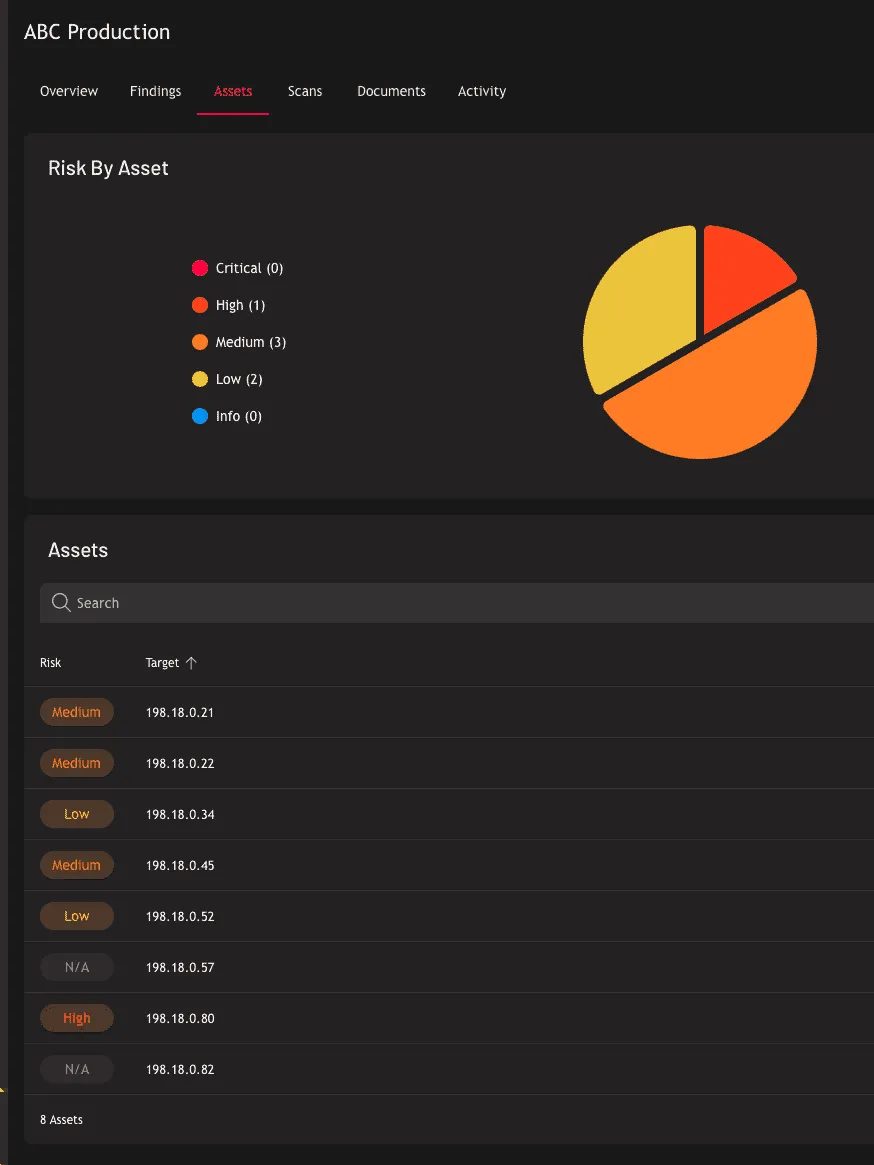
Your Attack Surface is Bigger Than You Think
Cloud migrations, remote work, SaaS adoption, and third-party integrations have created a sprawling digital footprint. Every new application, every cloud workload, every employee device expands your attack surface.
Shadow IT is Everywhere
Forgotten test servers, abandoned subdomains, unauthorized cloud instances, and employee-spun services create unknown vulnerabilities. Traditional asset inventories miss these “unknown unknowns.”
Attackers Find What You Miss
Adversaries use automated reconnaissance to scan your entire external presence. They discover exposed APIs, misconfigured cloud storage, leaked credentials, and vulnerable services, often before your security team does.
Expert-Led Attack Surface Management
Most ASM tools are automated scanners. It takes more than tools. Raxis puts penetration testers on the results.
Continuous Discovery, Analysis, and Monitoring
ASM discovers what attackers actually see, including shadow IT, forgotten assets, and misconfigured systems across your entire internet-facing infrastructure.
AI-Augmented Discovery
We leverage AI and automation to rapidly scan your entire external footprint, discovering domains, subdomains, cloud assets, IP ranges, and exposed services across your digital presence.
Attacker’s Perspective
We discover your assets the same way adversaries do, through reconnaissance, OSINT gathering, and external enumeration. Our team uses the same tools and techniques as real attackers to map your true external exposure.
Expert Analysis
Our penetration testers manually analyze discovered assets to assess true risk. We understand which misconfigurations are critical, which exposures are exploitable, and which vulnerabilities attackers target first.
Actionable Prioritization
Not all exposures are equal. We prioritize findings based on exploitability, business impact, and threat intelligence, helping you focus resources on what matters most.
Benefits of Expert-Led Attack Surface Management
Our attack surface management is run by the same senior penetration testers who perform Red Team operations for Fortune 500 companies.
Complete Visibility
Discover all internet-facing assets, including forgotten servers, shadow IT, cloud resources, and third-party services that traditional inventories miss.
Proactive Risk Reduction
Address vulnerabilities and exposures before attackers find them, reducing your organization’s overall attack surface and breach likelihood.
Compliance Support
Demonstrate due diligence and asset awareness for PCI DSS, HIPAA, SOC 2, ISO 27001, GDPR, and other frameworks requiring attack surface management.
Merger & Acquisition Support
Assess the security posture of acquisition targets or identify inherited risks from merged companies, including rogue assets and undisclosed infrastructure.
Third-Party Risk Management
Understand your exposure through vendors, partners, and subsidiaries whose security posture extends your attack surface.
Continuous Improvement
Track your attack surface over time, measure reduction efforts, and demonstrate security posture improvements to leadership and stakeholders.
Attack Surface Management Engagement Options
Point-in-Time Assessment
Comprehensive discovery and assessment of your current attack surface with detailed inventory, risk analysis, and remediation roadmap.
Duration: 2-4 weeks Best For: Initial baseline, annual assessment, pre-audit preparation
Continuous ASM
Ongoing monitoring and assessment through our Raxis Attack platform, with automated alerts for new assets, emerging threats, and configuration changes.
Duration: Subscription-based Best For: Dynamic environments, continuous compliance, proactive security
M&A Due Diligence
Rapid assessment of acquisition targets to identify hidden infrastructure, security debt, and inherited risks before the deal closes.
Duration: 1-2 weeks Best For: Pre-acquisition, merger integration, subsidiary assessment
ASM + Penetration Testing
Combine attack surface discovery with targeted penetration testing on high-risk assets for maximum security validation.
Duration: 3-6 weeks Best For: Comprehensive security assessment, high-risk environments
Why Choose Raxis for Attack Surface Management?

With Raxis Attack Surface Management, we use AI to accelerate reconnaissance, pattern detection, and initial scans. Then our engineers take over, and the analysis you read was written by one of them.
Penetration Testing Expertise
- Our ASM services are delivered by the same elite penetration testers who conduct Red Team operations and have compromised Fortune 500 systems.
Attacker Methodology
- We don’t just scan, we think like attackers, using the same reconnaissance techniques and tools that adversaries use to map targets.
AI-Augmented Efficiency
- Advanced automation accelerates discovery and enumeration, while human experts provide context, analysis, and strategic recommendations.
U.S.-Based Team
- All reconnaissance and analysis performed by experienced professionals located in the United States, with an average of 15+ years in offensive security.
14+ Years of Experience
- Trusted since 2011 to secure organizations across all industries, conducting 600+ security assessments annually with proven results.
Actionable Intelligence
- Detailed, prioritized findings with specific remediation guidance, not just lists of assets and vulnerabilities, but strategic recommendations.
FAQ: Attack Surface Management
How is Attack Surface Management different from vulnerability scanning?
Vulnerability scanning tests known assets for known vulnerabilities. ASM discovers ALL assets (including unknown ones) from an attacker's perspective, then assesses their security posture. Attack Surface Management answers "what do we have exposed?" while vulnerability scanning answers "what's wrong with what we know about?"
What information do you need to get started?
Minimal information is required. We typically only need your primary domain name, company name, and any known IP ranges or cloud accounts. Part of ASM's value is discovering what you don't know exists, so we don't need a complete asset list upfront.
Will Attack Surface Management disrupt our operations?
No. Attack surface management is conducted entirely from external, non-invasive reconnaissance, the same way attackers discover targets. We don't exploit vulnerabilities or attempt to breach systems during discovery. It's passive observation and analysis.
Do you assess third-party and vendor assets?
Yes. We can identify assets owned by subsidiaries, vendors, and partners that may extend your attack surface. This is particularly valuable for supply chain risk management and third-party security assessments.
How often should we conduct ASM?
It depends on your environment's rate of change. Organizations with frequent deployments, cloud migrations, or acquisitions benefit from continuous ASM. More stable environments typically conduct quarterly or annual assessments. We can help determine the right frequency based on your risk profile.
Can you discover cloud assets we don’t know about?
Yes. One of ASM's most valuable capabilities is discovering shadow IT and forgotten cloud resources, like abandoned S3 buckets, test environments left running, or employee-created instances. These are often the most vulnerable assets because no one is managing their security.
What makes Raxis ASM different from automated tools?
Most ASM platforms are automated scanners that generate asset lists. Raxis combines AI-powered automation with expert penetration testers who understand which findings matter most, how attackers think, and what to prioritize. We provide strategic analysis, not just data dumps.
Is Attack Surface Management required for compliance?
While not always explicitly required, ASM supports multiple compliance frameworks including PCI DSS (asset inventory requirements), ISO 27001 (asset management), SOC 2 (security monitoring), and GDPR (data mapping). It demonstrates due diligence in knowing what you have and where data resides.
Should we do ASM before or after a penetration test?
Ideally before. ASM discovers your complete external attack surface so penetration testing can target the right systems. However, many clients combine both services into a single comprehensive engagement for maximum value.
How much does Attack Surface Management cost?
Pricing varies based on your organization's size, number of domains, and assessment depth. Point-in-time assessments typically start around $15,000, while continuous ASM programs are subscription-based. Contact us for a customized quote based on your specific needs.